

Black Americans Invented Memorial Day. Then America Buried Them Too.

Before you read or listen: This piece is free. Every word of it. No paywall, no subscription required to reach the end. Total Hypocrisy: Unfiltered is independent journalism and independent journalism has real costs. Paid subscribers are the only reason it exists. If this work matters to you, consider becoming one.
A Track Built on Slavery. Then Something Happened There That America Could Not Allow You to Know.
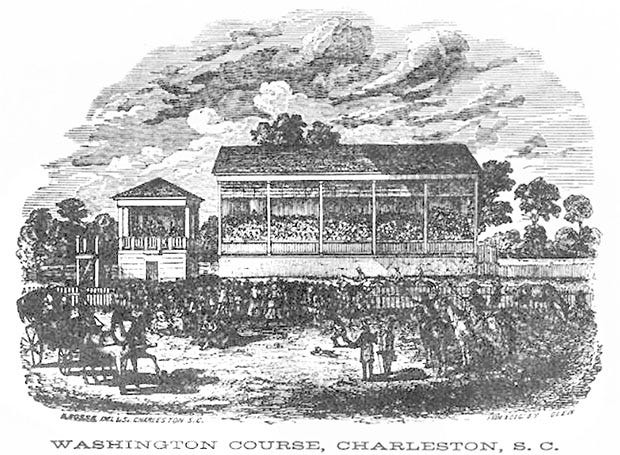
The Washington Race Course and Jockey Club in Charleston, South Carolina, was not simply a racetrack. It was a cathedral of the slave economy. Built in 1792, it was founded by men whose names read like a roster of the antebellum ruling class: Wade Hampton, Henry Middleton Rutledge, Gabriel Manigault, William Alston. These were not men of modest means. These were the architects of a civilization built on human bondage, and the Race Course was where they came to spend the wealth that bondage produced.
The people who groomed the horses, maintained the grounds, served the food, and cleaned up after those wealthy planters were enslaved. The racetrack was, in the most literal sense, a monument to what slavery bought.
When the Confederacy began to collapse and Charleston came under siege, the Jockey Club’s aristocratic members made themselves scarce. The racetrack that had hosted the finest horse racing in the South was converted into something else: an open-air prison camp for captured Union soldiers.
This is what the Confederacy built inside a racetrack that had been built on slavery: a place where men could be left to die in the open air, in the Southern heat, without shelter, without adequate food, without medicine, crammed into the infield of a track that had once been reserved for the leisure of the master class.
257 Men Died There. The Confederates Threw Them in a Ditch.
Many of the Union soldiers imprisoned at the Washington Race Course had come directly from Andersonville, the Confederate prison camp in Georgia that has gone down in history as one of the most brutal and deadly in the entire war. By the time they arrived in Charleston, they were already broken. Malnourished. Diseased. Barely alive.
The conditions at the Race Course were horrendous. Prisoners were kept in the open-air infield with almost no protection from the elements. Officers were housed in what had been the Ladies Club, once a venue for Charleston’s most lavish social events, now a warehouse for captured men. Disease moved through the camp at speed. Men died faster than their captors could be bothered to bury them properly.
At least 257 Union soldiers died at the Washington Race Course. The Confederate Army threw their bodies into a mass grave behind the grandstand. No markers. No records. No names. Just a pit of Union dead, hidden behind the same grandstand where Charleston’s finest had once cheered their horses to the finish line.
The Men and Women Who Were Supposed to Be Property Refused to Walk Away
Charleston fell to Union forces on February 18, 1865. The Confederate troops retreated. The wealthy white residents of Charleston, who had built their city and their fortunes on slavery, evacuated. They left.
The enslaved people they had tried to own stayed.
The war officially ended on April 9, 1865, when Robert E. Lee surrendered at Appomattox. In the weeks that followed, the newly freed Black residents of Charleston made a decision. They knew about the mass grave. They knew what had happened at the racetrack. And they refused to let it stand.
Twenty-eight Black workmen, volunteers from local church congregations, went to the Washington Race Course. Over the course of several weeks, they exhumed every body from the mass grave. They gave each man a proper individual burial. They dug individual graves. They placed individual markers. They did the work, with their hands, that the Confederacy had refused to do.
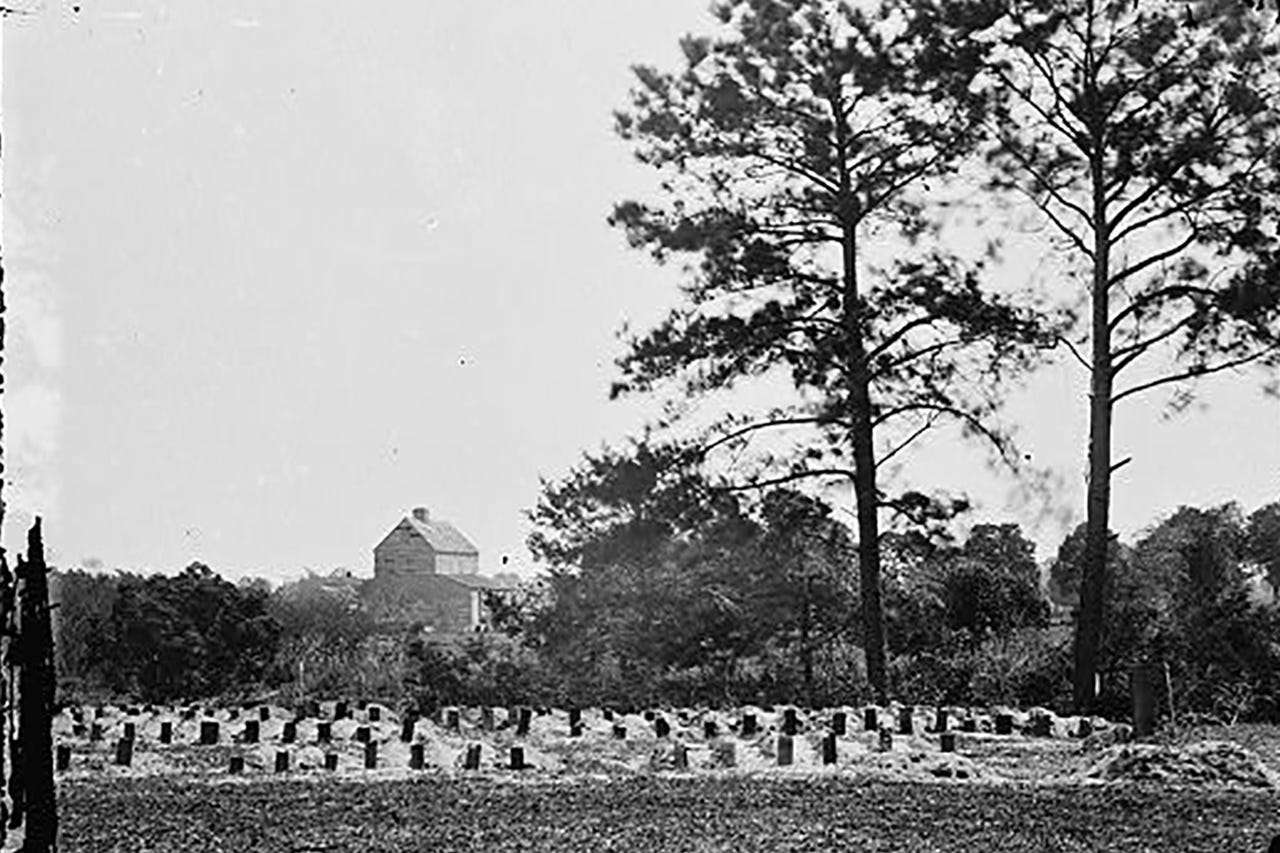
Then they built a tall wooden fence around the new cemetery. They whitewashed it. They constructed an archway over the entrance. And on that archway, they inscribed four words:
“Martyrs of the Race Course.”
They named the place. They claimed it. They transformed a site of Confederate cruelty and contempt into a consecrated burial ground. And then they planned a ceremony.
May 1, 1865: The Day 10,000 Free People Created Memorial Day
On May 1, 1865, three weeks after the end of the Civil War, something took place at the Washington Race Course that no one in power wanted to remember.
Ten thousand people gathered. The vast majority were formerly enslaved Black men, women, and children. White missionaries joined them. Black mutual aid societies were there. Black ministers led prayers. Freedmen’s Bureau teachers brought their students.
Three thousand Black schoolchildren led the procession. They carried armloads of flowers. They sang “John Brown’s Body” as they marched around the track.
Members of the 54th Massachusetts Infantry were present, the famed Black regiment whose story would later be told in the film Glory. The 20th, 35th, and 104th U.S. Colored Troops Regiments performed double-time marches. General Rufus Saxton, who had commanded Black Union troops throughout the war, spoke.
The marchers laid flowers on every grave. They sang hymns. They listened to speeches. They picnicked on the grounds. And even during the ceremony, according to contemporary accounts, “several slight disturbances” broke out, with “much harsh talk about the event locally afterward.” The returning white ruling class of Charleston did not appreciate what they were seeing: ten thousand freed people marching around their racetrack, declaring through their very presence what the war had been about.
It was documented. The Charleston Daily Courier covered it. The New York Tribune covered it. It was the earliest mass Memorial Day commemoration on record, at least a year before any other city, and three years before the first national observance.
And then America was made to forget it.
A Harvard Archive. A Stunned Historian. A Story Nobody Wanted Told.
In 1996, David Blight, a professor of history at Yale University who would later win the Pulitzer Prize, was deep in research for a book about the Civil War and American memory. In the archives at Harvard University, he came across the diary of a Union soldier. It referenced a ceremony in Charleston in May 1865. Something large. Something significant. Something he had never heard of.
Blight did what any historian would do. He called the institution most likely to have records of the event: the Avery Institute of Afro-American History and Culture at the College of Charleston, the institution specifically dedicated to preserving African American history in the city where the event allegedly occurred.
Their response was three words:
“This never happened.”
Think carefully about what that means. A ceremony attended by 10,000 people. Covered by major newspapers. Held in broad daylight in the heart of Charleston. And the institution dedicated to preserving African American history in that very city had no record of it. No institutional memory. No community tradition. Nothing.
Because in the decades after Reconstruction collapsed, someone had worked very hard to make sure this story did not survive.
Blight kept digging. He found the New York Tribune account. He found the Charleston Daily Courier account. He found an illustration by Alfred Waud depicting the cemetery and the fence. He found the documentation that proved the event happened exactly as described.
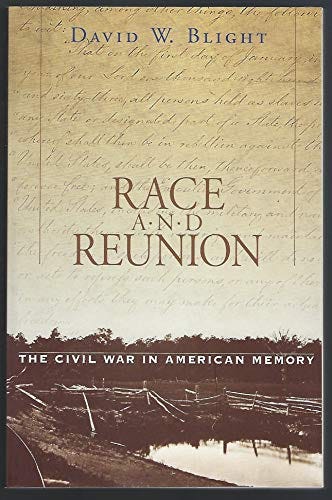
He published his findings in his 2001 book Race and Reunion: The Civil War in American Memory, which won the Bancroft Prize, the Gilder Lehrman Lincoln Prize, and the Frederick Douglass Prize. In that book, he laid out what the erasure of the Charleston ceremony represented: not an accident of history, but a deliberate choice made by a culture that needed to forget.
The Confederate Daughters Asked the Question. Then Buried the Answer.
About fifty years after the ceremony, a United Daughters of the Confederacy official from New Orleans sent an inquiry to the Ladies Memorial Association of Charleston, asking whether it was true that Black residents had held a burial rite and parade at the Race Course in May 1865.
The president of the Ladies Memorial Association, Mrs. S.C. Beckwith, responded with five words:
“I regret that I was unable to gather any official information in answer to this.”
The United Daughters of the Confederacy was not an innocent historical society. It was the organization most responsible for spreading Lost Cause mythology across American public life: lobbying for Confederate monuments, shaping Southern school curricula, pressuring textbook publishers, building a decades-long infrastructure of revisionism designed to recast the Civil War from a war to preserve slavery into a noble “states’ rights” struggle.
They knew about the ceremony. They asked about it. The story stayed buried anyway.
What the White Reconciliation Project Needed You to Forget
Blight’s Race and Reunion is a history of a theft. Not of land or money, but of meaning. In the decades after the Civil War, the nation faced a choice: had it been a war to end slavery, to establish that human beings could not be owned? Or a tragic conflict between honorable men of the Blue and the Gray, best resolved by shaking hands and moving on?
The reconciliationist vision won because white Americans on both sides found it more comfortable. Northern industrialists wanted Southern markets. Former Confederate soldiers wanted their dignity restored. Politicians wanted stability. None of that was compatible with a national story that centered the moral authority of freed Black Americans.
So the emancipationist vision was systematically pushed aside. Jim Crow rose. Confederate monuments went up. The Lost Cause seeped into textbooks, films, novels, and eventually into the bones of American culture. Reconstruction lasted only twelve years before the federal government abandoned it, withdrawing the troops that had enforced Black civil rights across the South. What followed was the dismantling of Black voting rights, Black political representation, Black economic independence, and Black historical memory.
As Blight put it, Race and Reunion is a history of “how a nation healed from civil war without justice.”
General Logan Got the Credit. Three Years After the Fact.
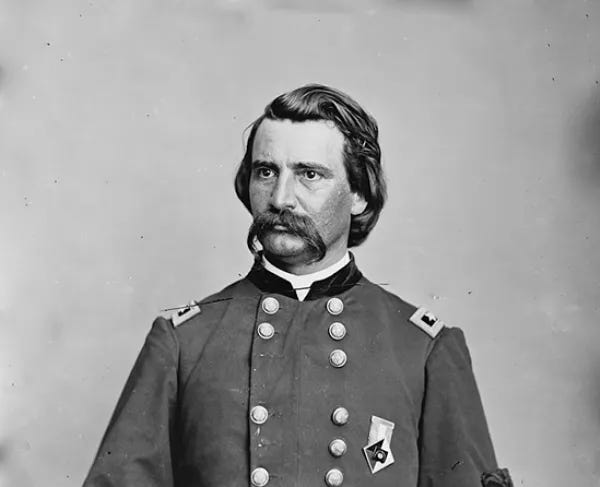
In 1868, General John A. Logan, commander of the Grand Army of the Republic, issued a proclamation calling for a national day of remembrance on May 30. Ceremonies were held in 183 cemeteries across 27 states. President Ulysses S. Grant attended the Arlington event. That became the official origin story. Logan’s date, May 30, became the national date until Congress moved it to the last Monday in May in 1971.
Logan’s ceremony was real and his grief genuine. But it happened three years after 10,000 freed Black Americans had already done it first, on the same premise, with the same ritual of flowers and remembrance.
They got nothing. Not even a footnote. Not for 130 years.
The Archway Is Gone. So Is the Marker.
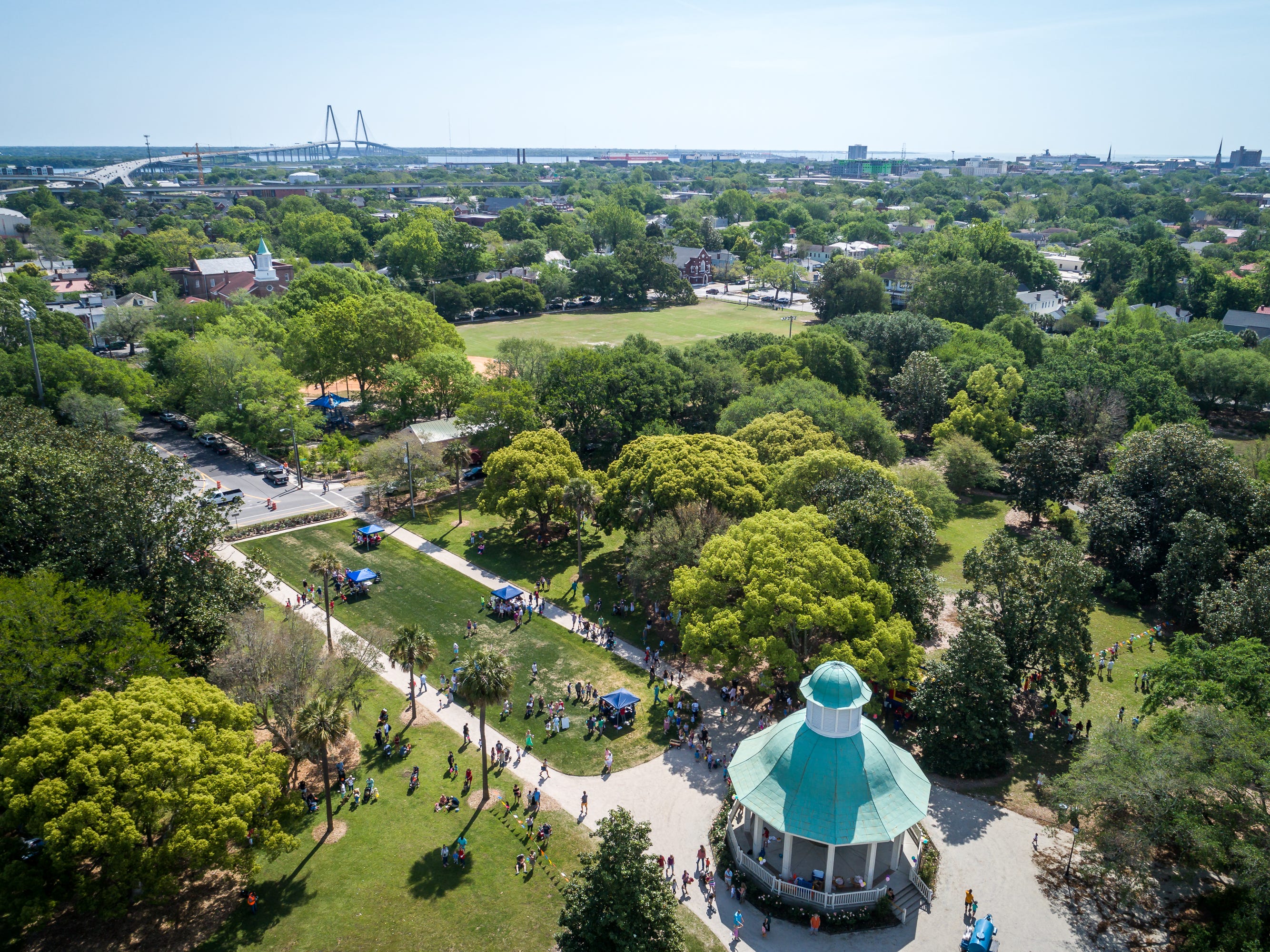
Hampton Park in Charleston is now a public park. Joggers and cyclists circle the same one-mile loop that was once the Washington Race Course, then a Confederate prison camp, then the site of the first Memorial Day in American history.
The whitewashed fence is gone. The archway inscribed “Martyrs of the Race Course” is gone. There is no monument at Hampton Park. No plaque. No permanent installation telling the story of what happened there on May 1, 1865.
The city of Charleston, the state of South Carolina, and the federal government have not seen fit to mark the ground where Memorial Day was actually born.
Meanwhile, the mattress sales continue.
What It Means That We Still Get This Wrong
You probably did not learn any of this in school. You were likely taught that Memorial Day began with Logan’s 1868 proclamation, or perhaps with early ceremonies in Columbus, Mississippi, or Waterloo, New York. What you were almost certainly not taught is that the largest, most documented, earliest mass Memorial Day observance on record was organized by formerly enslaved Black people in Charleston three years before Logan sent out his proclamation.
The reason is not a mystery. It is the same reason Black Union soldiers were written out of popular war accounts. The same reason the Lost Cause became mainstream history. The same reason Confederate monuments still stand in public squares while Hampton Park has no marker. Telling this story correctly requires acknowledging that Black Americans were not peripheral to the founding of this tradition. They were the founders. And a culture built on the premise of Black inferiority could not accommodate that truth.
Here is what Blight wrote about what the freed people of Charleston were doing on May 1, 1865:
“This was a story that had really been suppressed both in the local memory and certainly the national memory. But nobody who had witnessed it could ever have forgotten it.”
Nobody who witnessed it could forget it. The country just made sure their children never knew it in the first place.
Sources: David W. Blight, Race and Reunion: The Civil War in American Memory (Harvard University Press, 2001); The New York Tribune, May 1865; The Charleston Daily Courier, May 1865; History.com; Time Magazine; David W. Blight, "The First Decoration Day," Zinn Education Project, 2011; College of Charleston, Today at CofC; Airborne and Special Operations Museum Foundation; Snopes
Thank you so much for writing about this. Our whole history had been changed but with people you, the truth will come out.
I’ve read this story before. Tragic. You are an excellent writer, researcher, and human being.
As soon as I get out of my economic pit, I will become a member.